What was Winston Churchill reaction to the 1938 Munich Agreement
Churchill strongly opposed the appeasement of Hitler, a policy by which the British government, led by Prime Minister Neville Chamberlain
What was Winston Churchill's reaction to the Munich Agreement?
In Britain, the Munich Agreement was greeted with jubilation. However, Winston Churchill, then estranged from government and one of the few to oppose appeasement of Hitler, described it as ‘an unmitigated disaster’.
What was a result of the Munich Conference in 1938 apex?
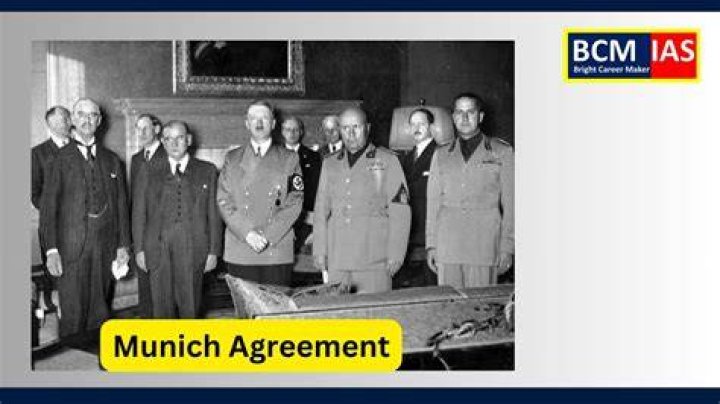
British and French prime ministers Neville Chamberlain and Edouard Daladier sign the Munich Pact with Nazi leader Adolf Hitler. The agreement averted the outbreak of war but gave Czechoslovakia away to German conquest.
Why did Churchill refuse Hitler's peace treaty?
He refused to allow the Third Reich a clear path to attack the Eastern Front – because he did not trust Hitler’s promises and it would have jeopardised his efforts to involve the U.S in the raging war, Mr Padfield says.How did the Munich Agreement affect Germany's actions?
How did the Munich Agreement affect Germany’s actions in the Czech region of the Sudetenland? It led Germany to declare war on France and Britain. … It led Germany to uphold the conditions of the Treaty of Versailles. It led Germany to invade and occupy the rest of Czechoslovakia.
What would happen if the British surrendered in WW2?
The war would have lasted much longer but ended in the same way. Originally Answered: What if Britain had surrendered during WW2? The UK would never have unconditionally surrendered, it would have asked for an armistice or cease fire.
Did Winston Churchill negotiate with Germany?
“Churchill was at pains to say in his memoirs that he was never going to negotiate with Germany, but it is clear that in 1940 he had not ruled out talking to a non-Hitler German government,” said Professor Reynolds. … This too was played down when Churchill came to writing The Second World War.
What was a result of the Munich Conference in 1938 answers?
The agreement allowed Germany to annex Czechoslovakia’s Sudetenland.How did Winston Churchill help in WW2?
As prime minister (1940–45) during most of World War II, Winston Churchill rallied the British people and led the country from the brink of defeat to victory. He shaped Allied strategy in the war, and in the war’s later stages he alerted the West to the expansionist threat of the Soviet Union.
What happened at the Munich Agreement?Munich Agreement, (September 30, 1938), settlement reached by Germany, Great Britain, France, and Italy that permitted German annexation of the Sudetenland, in western Czechoslovakia.
Article first time published onWhy was the Munich Agreement a failure?
It was France’s and Britain’s attempt to appease Hitler and prevent war. But war happened anyway, and the Munich Agreement became a symbol of failed diplomacy. It left Czechoslovakia unable to defend itself, gave Hitler’s expansionism an air of legitimacy, and convinced the dictator that Paris and London were weak.
Which of the following best describes the aftermath of the 1938 Munich Agreement quizlet?
Which of the following best describes the aftermath of the 1938 Munich Agreement? Hitler had the confidence to launch further invasions of European countries. What impact did the US development of the atomic bomb have on World War II?
What was the Munich Agreement quizlet?
The Munich Agreement was held in Munich Germany on the 29th September 1938. … The four powers agreed to give the Sudetenland to Germany, the Czechs had to agree. On the 1st of October 1938, German troops took over the Sudetenland, and Hitler made a promise to Chamberlain this would be his last demand.
What happened at this Munich Conference According to Shirer?
the French government made it clear that no negotiations would be made with Germany. this led to war because Germany pushed and pushed for negotiations. What happened at this Munich Conference according to Shirer? … They came to an agreement that there would be no war.
What argument does Churchill make in this speech?
Iron Curtain speech, speech delivered by former British prime minister Winston Churchill in Fulton, Missouri, on March 5, 1946, in which he stressed the necessity for the United States and Britain to act as the guardians of peace and stability against the menace of Soviet communism, which had lowered an “iron curtain” …
What was Churchill's purpose quizlet?
What was Churchill’s purpose for the speech? to preserve democracy and what has been grained through the suffer and sacrifice. “what has been gained with so much sacrifice and suffering shall be preserved for the future glory and safety of mankind.
What country did Winston Churchill lead in ww2?
Winston Churchill was an inspirational statesman, writer, orator and leader who led Britain to victory in the Second World War. He served as Conservative Prime Minister twice – from 1940 to 1945 (before being defeated in the 1945 general election by the Labour leader Clement Attlee) and from 1951 to 1955.
Would the UK have won ww2 without America?
NO! Britain would have never won the war had USA not helped it. British air power was vastly inferior to Germans.
Did Churchill ride the tube?
In the movie: The King stops by and Winston hops the tube. In reality: Nope.
What if Britain lost Dunkirk?
The loss of a British army at Dunkirk would have been a hard blow. It is likely that the British Army would have been forced into a humiliating surrender to the German forces. Hitler had already been putting out peace feelers to Britain vis neutral countries, mainly Switzerland.
How Winston Churchill changed the world?
Churchill is best remembered for successfully leading Britain through World War Two. He was famous for his inspiring speeches, and for his refusal to give in, even when things were going badly. Many people consider him the greatest Briton of all time and he’s almost certainly the most famous British prime minister.
What did Churchill want after ww2?
Each leader had an agenda for the Yalta Conference: Roosevelt wanted Soviet support in the U.S. Pacific War against Japan and Soviet participation in the UN; Churchill pressed for free elections and democratic governments in Eastern and Central Europe (specifically Poland); and Stalin demanded a Soviet sphere of …
What made Churchill a great leader?
While Churchill’s power to inspire, his strategic foresight, his driving passion, and his unstoppable personality were the core qualities that made him an effective leader and statesman, the realization that he too was a “worm” tempered his character and kept him focused.
How did Czechoslovakia feel about the Munich Agreement?
The Czechoslovaks were dismayed with the Munich settlement. They were not invited to the conference, and felt they had been betrayed by the British and French governments.
How did adopting the policy of appeasement at the Munich Conference in September 1938 Change Europe?
how did adopting the policy of appeasement at the Munich Conference in September 1938 change Europe? The Sudetenland was given to Germany. Which political leader gained power as a result of the failing economy of the Weimar Republic?
What led to the Munich Conference?
The Munich Conference came as a result of a long series of negotiations. Adolf Hitler had demanded the Sudetenland in Czechoslovakia; British Prime Minister Neville Chamberlain tried to talk him out of it. … Forever after, the term “Munich” became a symbol of appeasement that only hurts in the long run.
What Is The Munich mistake?
The “Munich mistake” ,mentioned by Speaker A refers to a policy of. appeasement. After WWII, the US was better able than its allies to adjust its economy from wartime to peacetime because the US. had suffered no widespread wartime destruction.
Was the Munich conference successful?
The Munich Agreement was an astonishingly successful strategy for the Nazi party leader Adolf Hitler (1889–1945) in the months leading up to World War II. … 30, 1938, and in it, the powers of Europe willingly conceded to Nazi Germany’s demands for the Sudetenland in Czechoslovakia to keep “peace in our time.”
Which of the following best describes the aftermath of the 1938 Munich agreement?
Which of the following best describes the aftermath of the 1938 Munich Agreement? Hitler had the confidence to launch further invasions of European countries. During the 1930s the United States followed a foreign policy of isolationism. Which is the best example of that policy?
How did Roosevelt's Lend Lease Act shift US foreign policy away from isolationism quizlet?
How did Roosevelt’s Lend-Lease Act shift US foreign policy away from isolationism? It lent arms to Allied forces and allowed them to pay later. During which decade did the US pursue a policy of isolationism? … The US froze Japan’s assets and exports.
What did Allied leaders decide to do with Germany?
During the Second World War, one of the major topics under discussion at conferences of the Allied leadership was how to deal with Germany after the war. … The Allies agreed to a joint occupation, with each country taking charge of a larger zone and a sector of the nation’s capital, Berlin.