What is the reproductive structure of flowering plants
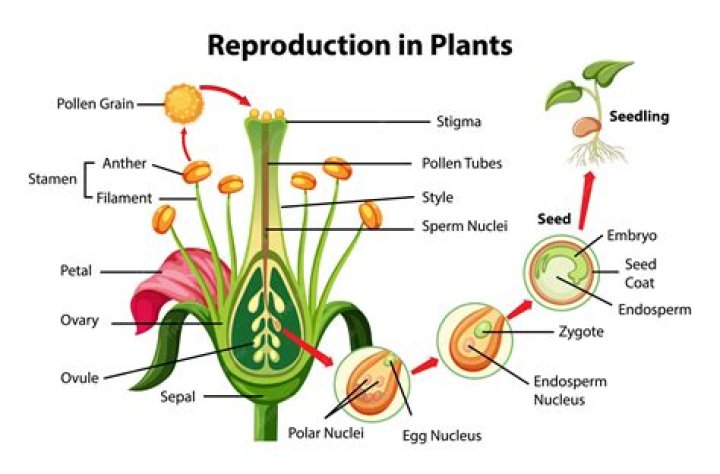
Structure. As a plant’s reproductive part, a flower contains a stamen (male flower part) or pistil (female flower part), or both, plus accessory parts such as sepals, petals, and nectar glands (Figure 19). The stamen is the male reproductive organ. It consists of a pollen sac (anther) and a long supporting filament.
What are the reproductive parts of flowering plants?
Reproductive parts of the flower are the stamen (male, collectively termed the androecium) and carpel (often the carpel is referred to as the pistil, the female parts collectively termed the gynoecium). A picture of a lily.
How does reproduction occur in flowering plants?
Flowering plants reproduce sexually through a process called pollination. The flowers contain male sex organs called stamens and female sex organs called pistils. … Plants can either self-pollinate or cross-pollinate. Self-pollination happens when a plant’s own pollen fertilizes its own ovules.
What are the reproductive structures in flowering plants and how do they work?
The main parts of a flower are the sepals and petals, which protect the reproductive parts: the stamens and the carpels. The stamens produce the male gametes in pollen grains. The carpels contain the female gametes (the eggs inside the ovules), which are within the ovary of a carpel.Are flowers reproductive structures?
A flower, sometimes known as a bloom or blossom, is the reproductive structure found in flowering plants (plants of the division Magnoliophyta, also called angiosperms). The biological function of a flower is to facilitate reproduction, usually by providing a mechanism for the union of sperm with eggs.
What is the structure and function of a flower?
Flower Structures Flowers are angiosperms‘ organs of sexual reproduction; each structure’s design serves a specific role toward that end. The pistil (stigma, style, and ovary) produces female gametes within ovules, and the stamen (filament and anther) produces male gametes, or pollen.
How do flowering plants reproduce ks2?
Pollen is carried by insects or blown by the wind from one flower to another. This process is called pollination. Pollen reaches the new flower and travels to the ovary where it fertilises egg cells (ovules) to make seeds. … The seeds are scattered by animals or the wind.
What is the ovule bearing reproductive unit of a flower?
The pistil, most often composed of an enlarged basal ovary, a columnar style, and distal stigma, is the ovule-producing organ of the flower.How do flowering plants reproduce asexually?
In natural asexual reproduction, roots can give rise to new plants, or plants can propagate using budding or cutting. In grafting, part of a plant is attached to the root system of another plant; the two unite to form a new plant containing the roots of one and the stem and leaf structure of the other.
What is flower structure?A typical flower has four main parts—or whorls—known as the calyx, corolla, androecium, and gynoecium (Figure 1). The outermost whorl of the flower has green, leafy structures known as sepals. … The second whorl is comprised of petals—usually, brightly colored—collectively called the corolla.
Article first time published onWhat are the four main parts of a flowering plant?
Most flowers have four main parts: petals, stamen (anther and filament), pistil (stigma, style and ovary), and sepals. After flowers are pollinated and fertilized, they produce seeds in the ovary of the flower.
What is a flowering plant life cycle?
Every flowering plant starts life as a seed. … The major stages of the flower life cycle are the seed, germination, growth, reproduction, pollination, and seed spreading stages. Plants are able to reproduce in two different ways – sexual reproduction and asexual reproducion.
How plants are pollinated ks2?
As they dig for the sweet nectar all the pollen rubs off on their bodies from the stamen. … Posey: When the bee digs into the next flower the pollen on her body rubs off onto the stigma of the new flower. This is called pollination. When the pollen lands on the stigma it travels down the style towards the ovary.
How do plants reproduce short answer?
Plants reproduce sexually through the fusion of male and female gametes in the flower. Asexual reproduction is through stems, roots and leaves. … The sexually reproductive part of a plant is the flower. Asexual reproduction involves vegetative reproduction through stems, roots, and leaves.
What is plant structure?
Plants have a root system, a stem or trunk, branches, leaves, and reproductive structures (sometimes flowers, sometimes cones or spores, and so on). Most plants are vascular, which means they have a system of tubules inside them that carry nutrients around the plant. … The basic structures of a vascular plant.
Why do some flowering plants reproduce vegetatively?
Answer: Most plant species that employ vegetative reproduction do so as a means to perennialize the plants, allowing them to survive from one season to the next and often facilitating their expansion in size.
Which structure contains the ovary of a flowering plant?
pistil, the female reproductive part of a flower. The pistil, centrally located, typically consists of a swollen base, the ovary, which contains the potential seeds, or ovules; a stalk, or style, arising from the ovary; and a pollen-receptive tip, the stigma, variously shaped and often sticky.
Which structure is thick to protect some of the reproductive structures in flowers?
The main parts of a flower are the sepals and petals, which protect the reproductive parts: the stamens and the carpels. The stamens produce the male gametes in pollen grains.
What is stamens and carpels?
Stamen is the male reproductive part of the flower that typically consists of a pollen-containing anther and a filament. The carpel is the female reproductive organ of a flower that consists of an ovary, a stigma, and a style and may be single or may be present in a group in some plants.
How many systems does a flowering plant have?
The parts of a flowering plant are characterized by two basic systems: a root system and a shoot system. These two systems are connected by vascular tissue that runs from the root through the shoot.
Which two parts of a flower are vegetative parts and which two are reproductive parts?
The plant structures such as leaves, stems, roots, flowers, fruits and seeds are plant organs. These structures can be divided into two groups namely reproductive parts and vegetative parts. Reproductive parts include flowers, fruits and seeds whereas the vegetative parts of the plant are leaf, stem, roots and leaves.
How does a flower bloom?
When those photoreceptor proteins tell the plant that it’s time to bloom, the plant sets in motion a molecular process that will result in flowers blooming. … The protein then travels to the tips of shoots, where it undergoes molecular changes that spur cells to begin to form flowers.
What are the 5 stages of a flower life cycle?
They follow a cyclic process of starting a new life, growing, and then coming back to the starting stage (reproducing). There are the 5 stages of plant life cycle. The seed, germination, growth, reproduction, pollination, and seed spreading stages.
What is fertilization and pollination?
Pollination is the transfer of pollen grains from an anther to a stigma. Fertilisation takes place inside the ovary when the nucleus of pollen grain fuses with the nucleus of an ovule to produce a zygote. …
What do the parts of a flower do ks2?
Stamens – Male part of the flower, they produce pollen and are made up of the anther and filament. Carpel – The female part of the flower, where seeds are made. Made up of the stigma, the style and the ovary. Pollen – Pollen is a fine yellow powder needed to make new plants, it’s carried by birds, insects or the wind!
How a bee pollinates a flower ks2?
The feeding insect rubs against the anthers, which rub pollen onto the insect. The insect is then attracted by another flower. As it feeds on the new flower, the pollen from the anther (male part of a flower) is deposited onto the stigma of the new flower (the female reproductive part of a flower).
What is reproduction mention two ways by which plants reproduce?
In plants there are two modes of reproduction, asexual and sexual. There are several methods of asexual reproduction such as fragmentation, budding, spore formation and vegetative propagation. Sexual reproduction involves the fusion of male and female gametes.
Can flowers reproduce asexually?
Yes, flowering plants can reproduce by asexual means of reproduction. There are many flowering plants, which are able to propagate themselves using asexual mode of reproduction. During the process of asexual reproduction in flowering plants, there is no involvement in pollen grains and fertilization.