What is the recovery period for nonresidential rental property under ads
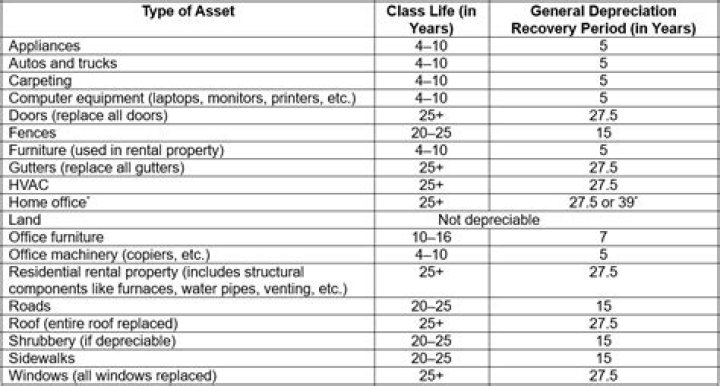
The TCJA leaves intact the recovery periods for nonresidential real property. They remain 39 years under the MACRS and 40 years under the ADS. The MACRS period for apartment buildings and other residential rental buildings also is unchanged, at 27.5 years.
What is the recovery period for nonresidential real property under ads?
Consequently, the recovery period for residential rental property remains 27.5 years and the recovery period for nonresidential real property remains 39 years. The original Senate bill also reduced the MACRS alternative depreciation system (ADS) recovery period for residential rental property from 40 years to 30 years.
What is the cost recovery period for residential rental property?
Any residential rental property placed in service after 1986 is depreciated using the Modified Accelerated Cost Recovery System (MACRS), an accounting technique that spreads costs (and depreciation deductions) over 27.5 years. This is the amount of time the IRS considers to be the “useful life” of a rental property.
What is the ADS recovery period?
Recovery periods for cars, light trucks, and computers is five years (same under GDS and ADS). Business office furniture and fixtures – Straight-line recovery period of 10 years under ADS. Personal property with no class life – ADS recovery period of 12 years.What is the Ads life for qualified improvement property?
Qualified improvement property is classified as 15-year property under GDS and 20-year property under ADS.
Can you take section 179 on ADS property?
You can deduct or depreciate cell phones under the regular rules for business property. … If you don’t, you can’t claim a Section 179 deduction. Instead, you must depreciate the property using the alternative depreciation system (ADS). The straight-line method is used under ADS.
Can nonresidential rental property Take section 179?
You cannot claim the section 179 deduction for property held to produce rental income. However, the IRS does allow special qualified properties related only to nonresidential (i.e. Commercial) rental properties to take Section 179. …
Is ADS depreciation subject to recapture?
Any accelerated depreciation previously taken is still taxed at the ordinary income tax rate during recapture. However, this is a rare occurrence because the IRS has mandated all post-1986 real estate be depreciated using the straight-line method.What is the difference between GDS and ADS?
Typically, the GDS uses shorter recovery periods than the ADS. The ADS sets depreciation as an equal amount each year, except for the first and last year, which might not be a full 12 months. This method lowers the annual depreciation cost because there are more years over which to depreciate the asset.
Is ADS property eligible for bonus depreciation?A significant difference between MACRS and ADS is that bonus depreciation is not permitted on certain assets being depreciated under the ADS method. Accordingly, business owners should be aware that making a RPTOB election may in turn reduce depreciation expense claimed each year.
Article first time published onWhat is considered a repair on a rental property?
A repair is necessary maintenance to keep the property in habitable and working condition. The IRS defines repairs as those that “do not add significant value to the property or extend its life.” When something is repaired, it is generally restored to its previous good condition, not improved upon.
What happens when rental property is fully depreciated?
It depends but in this instance, the residential rental property will be considered fully depreciated after 27.5 year. … According to the IRS, You must stop depreciating property when the total of your yearly depreciation deductions equals your cost or other basis of your property.
Is painting a repair or improvement?
Generally, painting between tenants is considered a repair. However, if the painting is part of a larger restoration project or an addition, then it becomes an improvement.
Which property is not required to use ADS depreciation?
With the advent of the TCJA and under the parameters of IRC Section 163(j), electing real property trades or businesses are now required to use ADS but ONLY on nonresidential real property, residential real property, and qualified improvement property.
What are examples of qualified improvement property?
Examples of such qualifying improvements include installation or replacement of drywall, ceilings, interior doors, fire protection, mechanical, electrical, and plumbing.
What qualifies as qualified improvement property?
Qualified improvement property is an improvement made by the taxpayer to an interior portion of a nonresidential building if the improvement is placed in service after the building was first placed in service.
How much depreciation can you write off?
Put another way, for each full year you own a rental property, you can depreciate 3.636% of your cost basis each year. If your cost basis in a rental property is $200,000, your annual depreciation expense is $7,273. For a commercial property, divide your cost basis by 39.
What assets are eligible for 100% bonus depreciation?
Eligible Property – In order to qualify for 30, 50, or 100 percent bonus depreciation, the original use of the property must begin with the taxpayer and the property must be: 1) MACRS property with a recovery period of 20 years or less, 2) depreciable computer software, 3) water utility property, or 4) qualified …
How long does bonus depreciation last?
The new bonus depreciation rules apply to property acquired and placed in service after September 27, 2017, and before January 1, 2023, at which time the provision expires unless Congress renews it. In 2023, the rate for bonus depreciation will be 80%. In 2024, it will be 60%, and in 2025, it will be 40%.
Is Section 179 going away?
Bonus Depreciation, typically used for expensing beyond the Section 179 limit, is 100% through 2022. The amounts then subsequently decrease to 80% (2023), 60% (2024), 40% (2025), and 20% (2026).
What is not eligible for Section 179?
To qualify for a Section 179 deduction, your asset must be: Tangible. … Intangible assets like patents or copyrights do not. Buildings and land also don’t qualify, although some equipment attached to the building does, including things like fire suppression systems, alarms, and air conditioning units.
Is a roof qualified improvement property?
In addition, the TCJA added to qualified real property the following improvements to nonresidential real property: Roofs; Heating, ventilation, and air-conditioning property (HVAC); Fire protection and alarm systems; and.
Does ADS use half year convention?
The mid-quarter convention applies to commercial and residential property. The half-year convention applies to all other property.
Can I use ADS depreciation?
You must use the ADS system for all assets in a specific class, but you can depreciate real estate on a property-by-property basis. Once you have chosen the alternative depreciation system for an asset, you can’t go back to the general depreciation system.
What code section is ADS depreciation?
The total section 179 deduction and depreciation you can deduct for a passenger automobile, including a truck or van, you use in your business and first placed in service in 2020 is $18,100, if the special depreciation allowance applies, or $10,100, if the special depreciation allowance does not apply.
When you sell a rental property do you have to pay back depreciation?
If you decide to sell your rental property for more than its current depreciated value, you will be required to pay what is referred to as the depreciation recapture tax. Essentially, this amounts to a 25 percent tax on the amount above depreciation value that your property sells for.
What is Ads life in depreciation?
Understanding Alternative Depreciation System (ADS) The useful life of an asset is an estimate of the number of years a company will use that asset to help generate revenue. … While the ADS method extends the number of years an asset can be depreciated, it also decreases the annual depreciation cost.
How do you avoid depreciation recapture on rental property?
Investors may avoid paying tax on depreciation recapture by turning a rental property into a primary residence or conducting a 1031 tax deferred exchange. When an investor passes away and rental property is inherited, the property basis is stepped-up and the heirs pay no tax on depreciation recapture or capital gains.
Can I deduct a new roof on rental property?
The cost of roof repairs can be deducted if you own a rental property. Roof replacement is considered an improvement and not a repair because it adds value to the property. You can recoup the cost of a new roof by depreciating the value every year.
Can I claim repairs on my rental property?
If you make any repairs to damage that existed when you purchased the property, this is considered an initial repair and won’t be an immediate deduction. You can claim initial repairs as Capital Works or Capital Allowances on the rental schedule.
Can I deduct my labor on a rental property?
Any expenses paid by a tenant on your behalf will be considered as income to you. However, these expenses may also be deductible as rental expenses. … While the cost of repairs is currently deductible, including the cost of labor and materials, landlords cannot deduct the value of their own labor.