What is femoral neck stress fracture
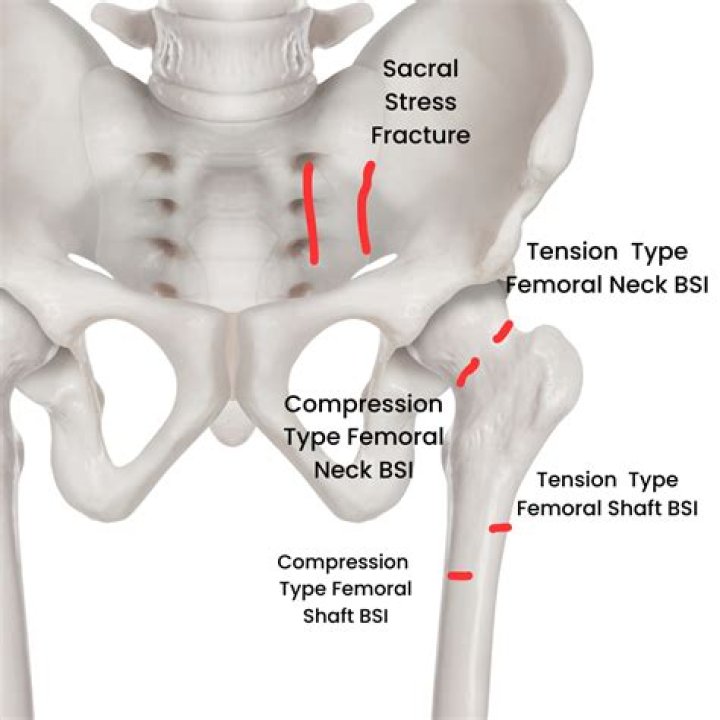
A femoral neck stress fracture is a fracture of the femoral neck secondary to repetitive loading that comes in 2 patterns: compression side (inferior-medial neck) or tension side (superior-lateral neck).
How serious is a femoral neck stress fracture?
Stress fractures may be incomplete or complete, and either non-displaced or displaced. Femoral neck stress fractures are considered high-risk for complications, particularly displacement; whereas, femoral shaft stress fractures are low-risk.
Can you walk with a femoral neck stress fracture?
Regardless of the grading all patients with a FNSF should cease all impact activities (running and jumping sports) for a minimum of 6 weeks. If there is any pain with walking, standing or the development of night pain, crutches will be required for a minimum of 3 weeks.
How do you treat a femoral neck stress fracture?
Treatment of Stress Fracture Bone generally takes 6-8 weeks to heal and this is the period of time where crutches and non-weight bearing are required. This period can be followed by a period of progressive partial weight bearing (still with crutches) and hopefully crutches can be discarded at approx. 12 weeks.What causes femoral neck stress fractures?
Femoral neck stress fractures (FNSFs) account for 3% of all sport-related stress fractures. The commonest causative sports are marathon and long-distance running. The main types of FNSF are compression-sided, tension-sided and displaced. The most common reported symptom is exercise-related groin pain.
How do you know if you have a femoral stress fracture?
What are the symptoms of a stress fracture of the shaft of the femur? A stress fracture of the shaft of the femur is characterised by a dull ache felt in the front of the thigh that will develop over a period of weeks. The pain is often hard to localise and may even be felt in the knee.
How do you know if you have a femoral neck stress fracture?
The primary presenting symptom of a femoral neck stress fracture is usually anterior groin pain. The pain is often exacerbated by training, such as jogging or running, and is relieved by rest. On physical examination, the most obvious feature is localized bony tenderness.
What is the fastest way to heal a stress fracture?
- Get Proper Nutrition. What you put in your body has a great impact on how well you’ll heal from your stress fracture. …
- Quit Smoking. Better blood flow equals better healing for your bones. …
- Eliminate Alcohol. …
- Get Plenty of Rest. …
- Listen to Your Doctor. …
- Get Moderate Exercise.
Can a femoral neck fracture heal on its own?
For example, if the ends of the broken bone are impacted, or were pushed together due to extreme force from an accident of fall, the bone can heal naturally. If this is the case, your healthcare provider may prescribe medication, bed rest, and physical therapy for a few weeks to allow healing.
How long should a person rest when he or she has a stress fracture?Stress fractures happen because of repetitive stress and overuse, so it’s important to avoid the activity that led to the fracture. Applying an ice pack (10 minutes) or ice massage (ice cube rub for three to five minutes) to the injured area. Resting for roughly two to eight weeks.
Article first time published onWhich part of the body is usually affected by stress fracture?
The lower leg and the foot are the most common areas to get a stress fracture. But they also can happen in other areas, such as the arm, spine, or ribs.
What is the most painful bone in your body to break?
Your femur is located in your thigh, running from your hip to your knee. It’s long and strong and hurts like heck when you break it. In addition to being one of the most painful breaks, a broken femur can damage the large arteries in the leg and cause severe bleeding.
Do stress fractures hurt all the time?
At first, you might barely notice the pain associated with a stress fracture, but it tends to worsen with time. The tenderness usually starts at a specific spot and decreases during rest.
How common are femoral stress fractures?
Stress fractures of the femur are relatively uncommon, and data from the literature suggest that they constitute only 2.8–7% of all sport related stress fractures.
How painful is a femur fracture?
How Does It Feel? A femur fracture may cause extreme pain in the upper leg area or hip area. It also may cause lesser pain in the buttocks, knee, thigh, groin, or back.
How long does it take for a femoral neck fracture to heal?
At some point, you may need physical therapy to restore strength and flexibility to your muscles. Doing your exercises as prescribed can improve your chances for a full recovery. Most femoral fractures take about 4 to 6 months to heal completely, but you should be able to resume many activities before this time.
What are the complications of femoral neck fracture?
Most complications are associated with fracture displacement or a delay in diagnosis. Complications include delayed union, nonunion, refracture, osteonecrosis, and avascular necrosis. Early fixation failure (within 3 months of surgery) occurs in 12-24% of displaced femoral neck fractures treated by internal fixation.
Is a femoral neck fracture the same as a hip fracture?
A femoral neck fracture is a type of hip fracture of the thigh bone (femur)—just below the ball of the ball-and-socket hip joint. This type of fracture disconnects the ball from the rest of the femur. It often causes groin pain that worsens when you putting weight on the injured leg.
Do stress fractures show up on xray?
Stress fractures often can’t be seen on regular X-rays taken shortly after your pain begins. It can take several weeks — and sometimes longer than a month — for evidence of stress fractures to show on X-rays.
Does walking on a stress fracture make it worse?
Stressing the fracture site repeatedly may cause the cracks to widen and the bone to weaken further. Doctors do not recommend walking when you have a stress fracture because it may reopen the partially healed fracture, and you may have to begin the recovery process again.
Do you have to wear a boot for a stress fracture?
Walking: You may walk on the foot as comfort allows but you may find it easier to walk on your heel in the early stages. The boot you have been given is for your comfort only and is not needed to aid fracture healing but will help to settle your symptoms and should be worn for walking for 6 weeks.
How do you know when a stress fracture is healed?
Once your pain has subsided, your doctor may confirm that the stress fracture has healed by taking x-rays. A computed tomography (CT) scan can also be useful in determining healing, especially in bones where the fracture line was initially hard to see.
Do stress fractures heal on their own?
Stress fractures generally heal on their own with simple measures, such as avoiding activities that put stress on the area. In some cases, however, surgery is needed to help the fracture heal properly. Many stress fractures occur in the foot or lower leg.
What is the difference between a stress fracture and a fracture?
A stress fracture is a micro-break or crack in the bone. It’s a common overuse injury among athletes. While a regular fracture is a traumatic injury that occurs immediately during impact, a stress fracture develops over time.
What's the least painful broken bone?
- Clavicle. The clavicle or collarbone is located near the front side of the chest near the shoulders and can fracture when pressure or stress is placed on the shoulders or when the arms are stretched out. …
- Arm. …
- Leg. …
- Hip. …
- Wrist.
What's the hardest bone to heal?
The femur — your thigh bone — is the largest and strongest bone in your body. When the femur breaks, it takes a long time to heal. Breaking your femur can make everyday tasks much more difficult because it’s one of the main bones used to walk.
What is the weakest bone in your body?
The clavicle or the collar bone is the softest and weakest bone in the body.
Why is fracture pain worse at night?
During the night, there is a drop in the stress hormone cortisol which has an anti-inflammatory response. There is less inflammation, less healing, so the damage to bone due to the above conditions accelerates in the night, with pain as the side-effect.
Do stress fractures hurt at night?
As it gets worse, the pain can start to be present when at rest and at night. The involved bone may be tender to touch and there is often some swelling. However, it is important to remember not all stress fractures have these typical symptoms.