What are the clinical features of the common immunodeficiency disorder
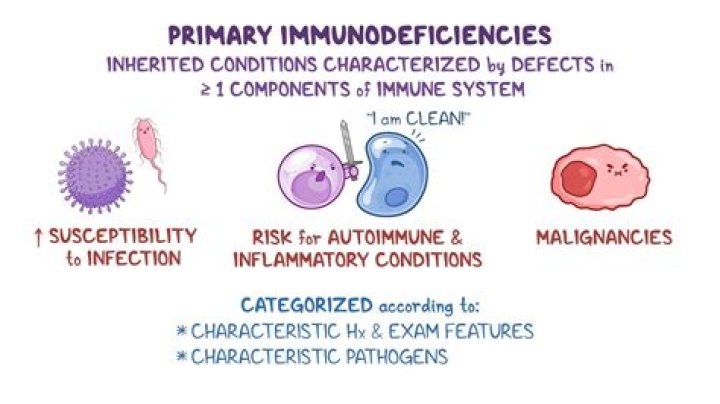
Frequent and recurrent pneumonia, bronchitis, sinus infections, ear infections, meningitis or skin infections.Inflammation and infection of internal organs.Blood disorders, such as low platelet counts or anemia.Digestive problems, such as cramping, loss of appetite, nausea and diarrhea.
What is common variable immunodeficiency and its clinical manifestations?
CVID is a genetic disorder that affects the immune system. People with this condition have low levels of antibodies (proteins that fight infections) in their blood. When the body does not have enough of these antibodies, people may experience frequent infections.
What are common immune disorders?
Autoimmune Disease Basics Rheumatoid arthritis, a form of arthritis that attacks the joints. Psoriasis, a condition marked by thick, scaly patches of skin. Psoriatic arthritis, a type of arthritis affecting some people with psoriasis. Lupus, a disease that damages areas of the body that include joints, skin and organs.
What is the most common immunodeficiency disorder?
results in acquired immunodeficiency syndrome (AIDS), the most common severe acquired immunodeficiency disorder.What is immunodeficiency disorders?
Immunodeficiency disorders may affect any part of the immune system. Most often, these conditions occur when special white blood cells called T or B lymphocytes (or both) do not function normally or your body does not produce enough antibodies.
How is CVID diagnosed?
The diagnosis of CVID is primarily established by testing for low blood (serum) IgG immunoglobulin concentrations ranging from severely reduced (<100 mg/dL) to just below adult normal range (500-1200 mg/dL). In addition, laboratory testing may reveal normal or, in some cases, reduced numbers of circulating B cells.
What is the difference between SCID and CVID?
Babies with SCID die from overwhelming infections, usually before reaching age 1. Bone marrow transplant can cure some cases of SCID. Common variable immune deficiency (CVID). Due to a genetic defect, the immune system produces too few antibodies to effectively fight infections.
What are the 3 most common autoimmune diseases?
- Type 1 diabetes. The pancreas produces the hormone insulin, which helps regulate blood sugar levels. …
- Rheumatoid arthritis (RA) …
- Psoriasis/psoriatic arthritis. …
- Multiple sclerosis. …
- Systemic lupus erythematosus (SLE) …
- Inflammatory bowel disease. …
- Addison’s disease. …
- Graves’ disease.
What are 10 common diseases that cause a secondary immunodeficiency?
- severe burns.
- chemotherapy.
- radiation.
- diabetes mellitus.
- malnutrition.
Primary immune deficiency diseases (PIDDs) are rare, genetic disorders that impair the immune system. Without a functional immune response, people with PIDDs may be subject to chronic, debilitating infections, such as Epstein-Barr virus (EBV), which can increase the risk of developing cancer. Some PIDDs can be fatal.
Article first time published onIs Immunodeficiency the same as immunocompromised?
A person who has an immunodeficiency of any kind is said to be immunocompromised. An immunocompromised individual may particularly be vulnerable to opportunistic infections, in addition to normal infections that could affect anyone.
What is the main cause of immunodeficiency?
When most people think of immunodeficiency, they think of HIV or AIDS. However, there are many different causes of immunodeficiency. Worldwide, the most common causes are HIV, malnutrition, and unsanitary conditions.
What is the difference between autoimmune disease and immunodeficiency?
Immunodeficiency disorders and autoimmune disease are not exactly the same. An immunodeficiency is an impairment of the immune system, whereas an autoimmune disease is when the immune system attacks the body’s healthy cells, tissues and organs.
Is lupus considered an immunodeficiency?
Are people with lupus immunocompromised? People with lupus are considered immunocompromised and so could be at greater risk for infections in general because of their underlying disease itself and some of the medications they take to treat lupus.
Is CVID autoimmune?
Immune cells can accumulate in other organs, forming small lumps called granulomas. Approximately 25 percent of people with CVID have an autoimmune disorder, which occurs when the immune system malfunctions and attacks the body’s tissues and organs.
What is the treatment for CVID?
Treatment. CVID is treated with intravenous immunoglobulin infusions or subcutaneous (under the skin) immunoglobulin injection to partially restore immunoglobulin levels. The immunoglobulin given by either method provides antibodies from the blood of healthy donors.
What type of doctor do you see for immune deficiency?
An immunologist treats health issues brought on by immune system problems. Also known as allergists, immunologists are doctors who diagnose, treat, and work to prevent immune system disorders. You may see an immunologist if you have food or seasonal allergies, hay fever, eczema or an autoimmune disease.
What is the most common secondary immunodeficiency disorder?
Perhaps the most well known secondary immunodeficiency is caused by HIV infection; however, the most prevalent cause of immunodeficiency worldwide is severe malnutrition, which affects as much as 50% of the population in some impoverished communities.
What is the most common cause of secondary immunodeficiency disorders?
- Radiation or chemotherapy, which can lead to a secondary immunodeficiency disorder known as neutropenia.
- Chronic disease.
- Severe burns.
- Infections due to human immunodeficiency virus (HIV) can result in acquired immune deficiency syndrome (AIDS)
Which of the following is an autoimmune disorder?
Autoimmune diseases include systematic lupus erythematosus, rheumatoid arthritis, psoriasis, type 1 diabetes, Crohn’s disease, and multiple sclerosis.
What are 3 possible reasons for immunodeficiency?
The most common causes worldwide include malnutrition, poor sanitary conditions and human immune deficiency virus (HIV) infection.
What is the effect of immunodeficiency?
Signs and symptoms of primary immunodeficiency can include: Frequent and recurrent pneumonia, bronchitis, sinus infections, ear infections, meningitis or skin infections. Inflammation and infection of internal organs. Blood disorders, such as low platelet counts or anemia.
Is SLE a primary immunodeficiency?
Introduction. SLE is associated with several types of primary immunodeficiency (PID) [ 1 ]. Deficiency of early components of the complement cascade (C1q, C2 and C4) are the most commonly reported forms of PID in SLE [ 2 , 3 ].
Is benlysta an immunosuppressant?
Belimumab (Benlysta”, Glaxo-SmithKline) is an immunosuppressant monoclonal antibody that inhibits B cell differentiation into antibody-producing plasma cells.
What does it mean to be immunocompromised?
The term “immunocompromised” is actually quite broad and relatively poorly defined. But generally speaking, it means someone’s immune system isn’t working as well as it should be to protect them against infections.